
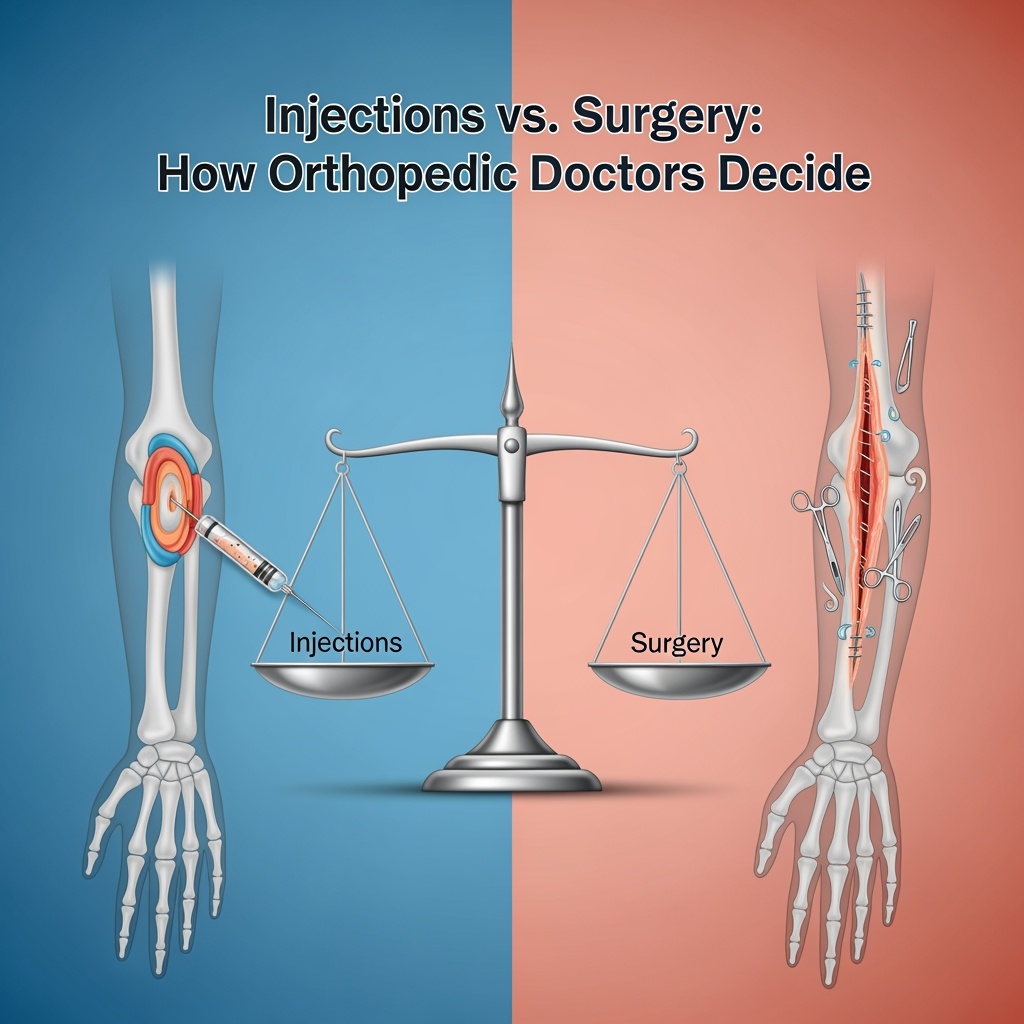
When dealing with joint pain or injury, one of the most common questions patients ask is whether they need surgery or if less invasive treatments might work. At Orthopedic Center of Florida, our specialists in Naples, Fort Myers, and Estero see patients every day who are navigating this decision. Understanding how orthopedic doctors evaluate your condition and determine the best treatment path can help you feel more confident about your care.
Understanding the Treatment Spectrum
Orthopedic care isn’t simply a choice between two options. Instead, think of it as a spectrum of treatments that range from the most conservative to the most invasive. Your orthopedic doctor will typically start with the least invasive option that has a good chance of relieving your symptoms and restoring function.
The treatment spectrum generally follows this progression: rest and activity modification, physical therapy, oral medications, injections, and finally surgery. Each step builds on the previous one, and many patients find relief before reaching the surgical stage. The goal is always to achieve the best outcome with the least risk and recovery time.
Most orthopedic specialists follow what’s called a “conservative-first” approach. This means exhausting appropriate non-surgical options before recommending surgery, unless your condition requires immediate surgical intervention to ensure safety or prevent permanent damage.
When Injections Are the Right Choice
Injections serve multiple purposes in orthopedic care. They can provide diagnostic information, offer therapeutic relief, or buy time while other treatments take effect. For many joint conditions, injections are an excellent middle ground between basic conservative care and surgery.
Injections work particularly well for inflammatory conditions. If your joint pain stems primarily from inflammation rather than structural damage, targeted injections can reduce swelling and provide significant relief. Conditions like bursitis, tendinitis, and early-stage arthritis often respond well to injection therapy.
Another key advantage of injections is that they’re minimally invasive and carry a relatively low risk. Most patients can receive injections in an office setting and return to normal activities quickly. There’s no lengthy recovery period, no general anesthesia, and no surgical incisions to heal.
Injections also offer a “trial period” for evaluating your condition. If you get substantial relief from an injection, it tells your doctor that the targeted area is indeed the source of your pain. If the injection doesn’t help, it may indicate a more complex problem or that a different approach is needed.
Types of Orthopedic Injections
Several types of injections are commonly used in orthopedic practice, each with specific benefits:
- Corticosteroid injections are among the most frequently used. These powerful anti-inflammatory medications can dramatically reduce swelling and pain in joints, tendons, and bursae. They’re particularly effective for arthritis flare-ups, frozen shoulder, and inflammatory conditions. The effects typically last several weeks to several months.
- Hyaluronic acid injections, often called visco supplementation, are used primarily for knee osteoarthritis. These injections supplement the natural lubricating fluid in your joints, potentially improving mobility and reducing pain. Some patients experience relief for six months or longer.
- Platelet-rich plasma (PRP) injections use concentrated platelets from your own blood to promote healing. This regenerative medicine approach is gaining popularity for treating tendon injuries, mild arthritis, and certain ligament problems. The healing process takes time, so results aren’t immediate but can be long-lasting.
- Corticosteroid injections deliver numbing medication to block pain signals. While they’re often used diagnostically to pinpoint pain sources, they can also provide temporary relief for nerve-related pain conditions.
When Surgery Becomes Necessary
Despite the effectiveness of injections and other conservative treatments, some situations require surgical intervention. Understanding when surgery becomes the appropriate choice helps patients make informed decisions about their care.
Structural damage that won’t heal on its own often necessitates surgery. A completely torn rotator cuff, a severely damaged meniscus, or advanced joint degeneration may not respond adequately to injections. When the physical structure of your joint is compromised beyond what the body can repair naturally, surgery may be needed to restore function.
Progressive conditions that worsen despite conservative treatment are another indicator for surgery. If you’ve tried physical therapy, medications, and multiple rounds of injections without adequate improvement, or if your condition continues to deteriorate, surgery might be the best option to prevent further damage.
Significant functional limitations that impact your quality of life can justify surgical intervention. If you can’t perform basic daily activities, your mobility is severely restricted, or your pain prevents you from working or enjoying life, surgery may offer the best chance for meaningful improvement.
Acute injuries sometimes require immediate surgery. A displaced fracture, a completely ruptured tendon, or an unstable joint may need prompt surgical repair to achieve the best outcome and prevent complications.
How Your Doctor Makes the Decision
Orthopedic specialists use a systematic approach to determine whether injections, surgery, or another treatment is most appropriate for your situation. This decision-making process is both scientific and individualized.
Your doctor begins with a comprehensive evaluation that includes your medical history, physical examination, and imaging studies. X-rays, MRIs, or CT scans help visualize the extent of damage and identify specific problems. The severity of structural damage plays a major role in treatment selection.
Your symptoms and how they affect your life matter greatly. Two patients with similar imaging findings might receive different treatment recommendations based on their pain levels, functional limitations, and personal goals. A recreational jogger and a professional athlete with the same knee injury might approach treatment differently.
Your overall health and medical conditions influence the treatment decision. Some patients aren’t good surgical candidates due to other health issues, making injections and conservative care more appropriate. Conversely, some patients are healthy enough for surgery and may benefit from addressing the problem definitively rather than managing it long-term with injections.
Age is another consideration, though not in the way you might expect. Younger patients with significant structural damage might benefit more from surgical repair to prevent arthritis decades later. Older patients with degenerative changes might do well with symptom management through injections, especially if they can avoid or delay surgery until it’s necessary.
Your preferences and lifestyle goals are essential to the decision. An orthopedic doctor should discuss your expectations, activity level, occupation, and what you hope to achieve with treatment. These factors help determine which approach aligns best with your personal situation.
What to Expect During the Decision-Making Process
When you visit an orthopedic specialist, expect a thorough consultation focused on understanding your condition and exploring treatment options.
Your doctor will discuss the benefits and limitations of both injections and surgery as they apply to your specific condition. You’ll learn what each treatment can realistically accomplish, how long relief might last, and what the recovery process involves.
Many orthopedic physicians recommend a trial of injections before considering surgery, assuming your condition allows for this stepped approach. This gives you the opportunity to experience relief without surgical intervention and provides valuable information about your condition.
If injections are recommended, your doctor will explain how many you might need and over what timeframe. Some conditions respond to a single injection, while others benefit from a series. You’ll also learn about the expected timeline for improvement.
If surgery appears necessary, your orthopedic surgeon will explain the specific procedure recommended, why it’s the best option for your situation, and what outcomes you can expect. You’ll have the opportunity to ask questions and discuss any concerns before making a decision.
At Orthopedic Center of Florida, our orthopedic team and specialists in Naples, Fort Myers, and Estero is committed to helping you find the most effective treatment for your joint condition. Whether that’s injections, surgery, or another approach, we’ll work with you to develop a personalized treatment plan that addresses your needs and helps you return to the activities you love. Call the Orthopedic Center of Florida today at (239) 482-2663 or use our convenient online form to schedule an initial consultation.
Frequently Asked Questions
How many injection treatments should I try before considering surgery?
This varies by condition and individual response. Generally, if you don’t experience significant improvement after two to three properly spaced injections, your doctor may recommend reevaluating your treatment plan. However, some patients benefit from periodic injections long-term without ever needing surgery.
Are injections just masking the problem instead of fixing it?
Not necessarily. While some injections provide temporary symptom relief, others can promote actual healing or slow disease progression. For conditions like mild to moderate arthritis, managing symptoms with injections is a valid long-term strategy that may delay or prevent surgery.
Will delaying surgery make my condition worse?
For most chronic conditions, waiting to try conservative treatments first doesn’t cause harm and may help you avoid surgery altogether. However, certain acute injuries or rapidly progressive conditions require prompt surgical treatment. Your orthopedic doctor will tell you if your situation requires urgent intervention.
Can I get injections indefinitely?
Most orthopedic doctors limit corticosteroid injections to three or four per year in the same joint due to potential side effects. Other injection types have different guidelines. Your doctor will create an appropriate treatment schedule based on the type of injection and your response.
How do I know if I’m ready for surgery?
You’re likely ready for surgical evaluation if conservative treatments have failed to provide adequate relief, your quality of life is significantly impacted, you have progressive worsening of your condition, or you have structural damage that won’t heal without surgical repair. The decision should be made collaboratively with your orthopedic specialist based on your specific situation and goals.

- Injections vs Surgery: How Orthopedic Doctors Decide - March 5, 2026