
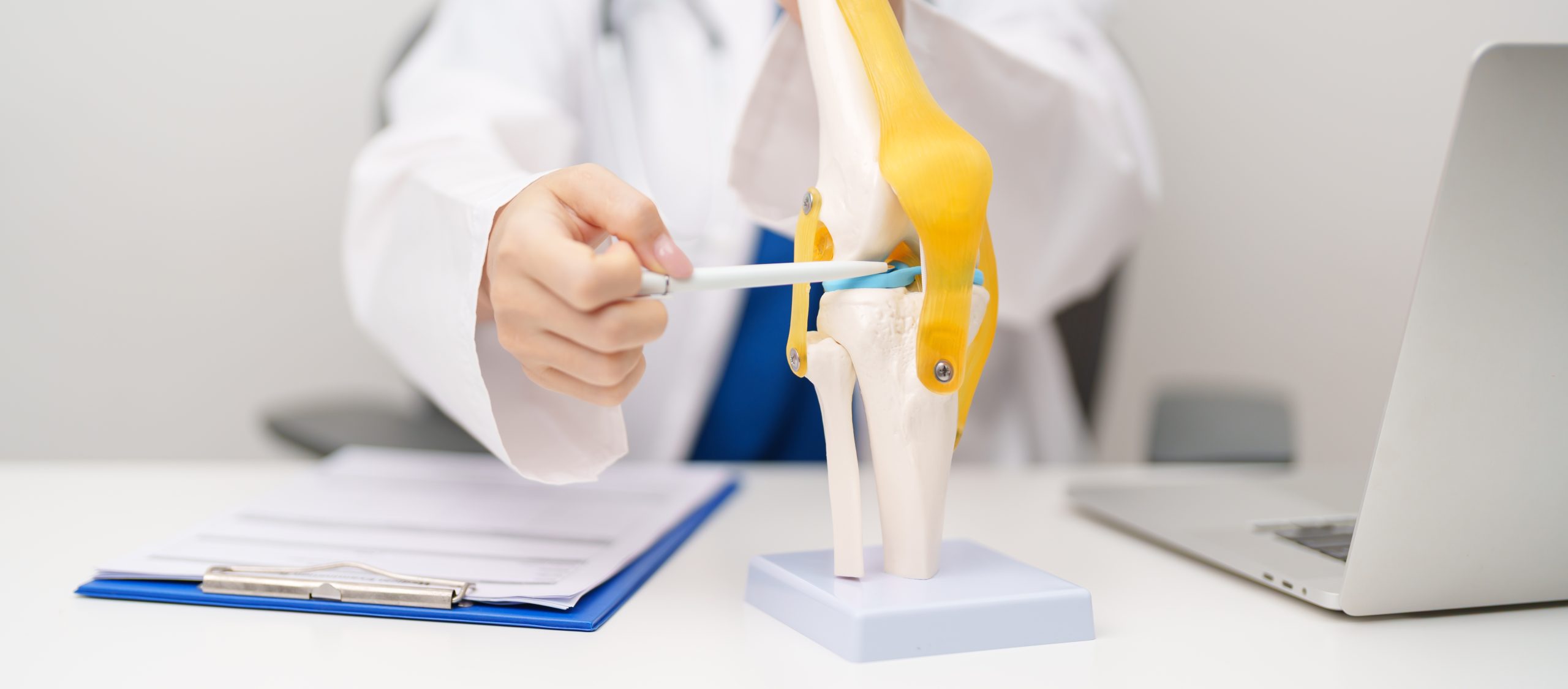
The knee is one of the most complex and frequently injured joints in the human body. Whether you’re an athlete pushing your limits, a weekend warrior enjoying recreational activities, or simply going about your daily routine, knee injuries can happen to anyone at any time. At the Orthopedic Center of Florida, we see patients with a wide range of knee problems. Understanding the types and causes of common knee injuries can help you recognize symptoms early and seek appropriate treatment.
Understanding Knee Anatomy
Before diving into specific injuries, it’s helpful to understand the basic structure of your knee. The knee joint connects your thighbone (femur) to your shinbone (tibia) and includes your kneecap (patella). Several key structures work together to provide stability and movement. Four major ligaments act like strong ropes holding the bones together: the anterior cruciate ligament (ACL), posterior cruciate ligament (PCL), medial collateral ligament (MCL), and lateral collateral ligament (LCL). Two pieces of cartilage called menisci cushion the joint and act as shock absorbers. Tendons connect muscles to bones, with the patellar tendon and quadriceps tendon being particularly important for knee function.
Ligament Injuries
Ligament injuries are among the most common and debilitating knee problems we treat. The ACL is frequently injured during sports that involve sudden stops, jumping, or changes in direction. Basketball, soccer, football, and skiing are particularly high-risk activities. You might hear a popping sound when an ACL tears, followed by immediate swelling and instability. The knee may feel like it’s giving way when you try to stand or walk.
MCL injuries typically occur from a blow to the outer side of the knee, forcing it inward. This commonly happens in contact sports such as football and hockey. The MCL can also be injured during activities that involve twisting motions. Symptoms include pain and tenderness along the inner side of the knee, swelling, and difficulty bending the knee.
PCL and LCL injuries are less common but equally serious. PCL tears often result from direct impact to the front of the knee, such as hitting the dashboard in a car accident. LCL injuries usually occur from force pushing the knee outward.
Meniscus Tears
The meniscus is a C-shaped piece of cartilage that acts as a cushion between your femur and tibia. You have two menisci in each knee, one on the inside (medial) and one on the outside (lateral). Meniscus tears are extremely common, especially as we age. The cartilage becomes weaker and more brittle over time, making it susceptible to tearing even from routine activities like squatting or twisting.
In younger people, meniscal tears typically result from forceful twisting or rotation of the knee, especially when the foot is planted and the knee is flexed. Athletes in sports that require quick pivoting are at higher risk. Older adults can tear a meniscus from something as simple as getting up from a chair or stepping awkwardly.
Symptoms of a meniscus tear include pain, particularly when twisting or rotating the knee, swelling and stiffness, a catching or locking sensation, and the feeling that your knee is giving way. Some people describe feeling like something is blocking the knee from fully straightening.
Tendon Injuries
Tendons can be strained, inflamed, or torn. Patellar tendinitis, also known as jumper’s knee, is an inflammation of the tendon connecting your kneecap to your shinbone. This overuse injury is common among athletes who participate in jumping sports such as basketball and volleyball. The repetitive stress on the tendon causes small tears, leading to inflammation and pain just below the kneecap.
Quadriceps tendinitis affects the tendon above the kneecap and results from similar overuse patterns. These injuries develop gradually, typically starting with mild pain during or after activity, which progressively worsens if left untreated.
A complete tendon tear is a more serious injury that usually occurs from a sudden, forceful contraction of the quadriceps muscle or from a direct blow to the front of the leg. You may hear a popping or tearing sound, experience immediate severe pain, and be unable to straighten your knee or walk normally.
Fractures and Dislocations
Knee fractures most commonly involve the kneecap but can also affect the ends of the femur or tibia that form the joint. These injuries typically result from high-impact trauma such as falls, motor vehicle accidents, or sports collisions. Osteoporosis can make older adults more susceptible to fractures from lower-impact incidents.
A fractured kneecap causes severe pain, immediate swelling, inability to straighten the leg or walk, and visible deformity or abnormal appearance of the knee. Fractures around the knee joint require prompt medical attention to ensure proper healing and prevent long-term complications.
Knee dislocations are serious injuries where the bones of the knee are forced out of alignment. This requires tremendous force and often damages multiple ligaments, blood vessels, and nerves. True knee dislocations are medical emergencies requiring immediate treatment.
Overuse Injuries
Not all knee injuries happen in a single traumatic event. Many develop gradually through repetitive stress. Iliotibial band syndrome occurs when the thick band of tissue running from your hip to your shin becomes tight and rubs against the outer part of your knee. This is common in distance runners and cyclists. You’ll typically feel pain on the outside of the knee that worsens with continued activity.
Bursitis involves inflammation of the small fluid-filled sacs that cushion the outside of your knee joint. Kneeling for extended periods, repetitive kneeling, or a direct blow to the knee can cause bursitis. The affected area may be warm, tender, and swollen.
Patellofemoral pain syndrome, or runner’s knee, causes pain around or behind the kneecap. This condition results from muscle imbalances, overuse, injury, or anatomical factors affecting how the kneecap tracks in its groove. Activities that bend the knee, such as running, squatting, or climbing stairs, typically worsen the pain.
When to Seek Treatment
While minor knee pain often resolves with rest, ice, and over-the-counter pain medication, certain symptoms warrant professional evaluation. You should seek medical attention if you cannot bear weight on your knee, see obvious deformity or abnormal appearance, experience severe pain or swelling, have a fever along with a red, swollen knee (which could indicate infection), or feel like your knee is unstable or giving way.
At the Orthopedic Center of Florida, our experienced team uses advanced diagnostic techniques to accurately identify knee injuries and develop personalized treatment plans. We offer comprehensive care ranging from conservative treatments like physical therapy and injections to advanced surgical interventions when necessary.
Don’t let knee pain limit your life. Whether you’re in Naples, Fort Myers, or Estero, our locations provide convenient access to expert orthopedic care. Early diagnosis and treatment can prevent minor knee problems from becoming chronic conditions that affect your mobility and quality of life. Call the Orthopedic Center of Florida today at (239) 482-2663 or use our convenient online form to schedule an initial consultation.
Frequently Asked Questions
Can I walk on a torn ACL?
Many people can walk on a torn ACL, though the knee may feel unstable and give way during certain movements. However, continuing to be active on an ACL-torn knee can lead to additional damage to the meniscus and cartilage. Proper evaluation and treatment planning are essential.
How long does it take for a meniscus tear to heal?
Healing time depends on the location and severity of the tear. Small tears on the outer edge of the meniscus may heal in 6-8 weeks with conservative treatment. Tears in the inner portion have a poor blood supply and often require surgical repair, with recovery taking 3-6 months.
Are knee injuries preventable?
While not all knee injuries can be prevented, you can reduce your risk by warming up before activities, maintaining strong leg muscles (especially quadriceps and hamstrings), wearing appropriate footwear, using proper technique during sports and exercise, and avoiding sudden increases in activity intensity.
When is surgery necessary for a knee injury?
Surgery may be recommended for complete ligament tears (especially ACL tears in active individuals), meniscus tears that don’t respond to conservative treatment, fractures, or when the knee remains unstable despite rehabilitation. Many knee injuries can be successfully treated without surgery through physical therapy, bracing, and activity modification.
What’s the difference between a sprain and a strain?
A sprain involves stretching or tearing of ligaments (the tissues connecting bones), while a strain affects muscles or tendons (which connect muscles to bones). Both can occur in the knee, though ligament sprains are more common in this joint.

- Stress Fractures: Signs, Risk Factors & Recovery Timeline - May 15, 2026
- Rotator Cuff Tear Symptoms: What Shoulder Pain Could Be Telling You - May 5, 2026
- Types and Causes of Common Knee Injuries - February 9, 2026